
Essential Gear for Nature Photography (It’s Not What You Think)
Photo gear on a photo walk? Well, yeah, of course. But some things are equally important for a jaunt in nature.

Waterfalls on Savage Creek in Savage Gulf State Natural Area, Tennessee
The great outdoors is, well, great. Fresh air? Check. Beautiful scenery? Everywhere. Calming in a life of chaos? Maybe the main draw. Anybody can enjoy being in a natural place and I think everybody would benefit from going outdoors. And if you’re one of us that all your vacations and days off are scheduled for this, then you may already be a shutterbug for the walking trails and woodland streams.
We all like to talk about the lenses you should take, what camera is ideal for a grueling hike, and if this or that tripod is the one you need. Photography is often what pushes us to go adventuring so I don’t want to diminish the photographic gear discussion. But really, any camera and lens will work pretty great. Just grab the photo gear you already use and don’t worry about what you saw on YouTube for now. There are actually some things arguably more important than a top 10 listed camera that can make or break your trip.
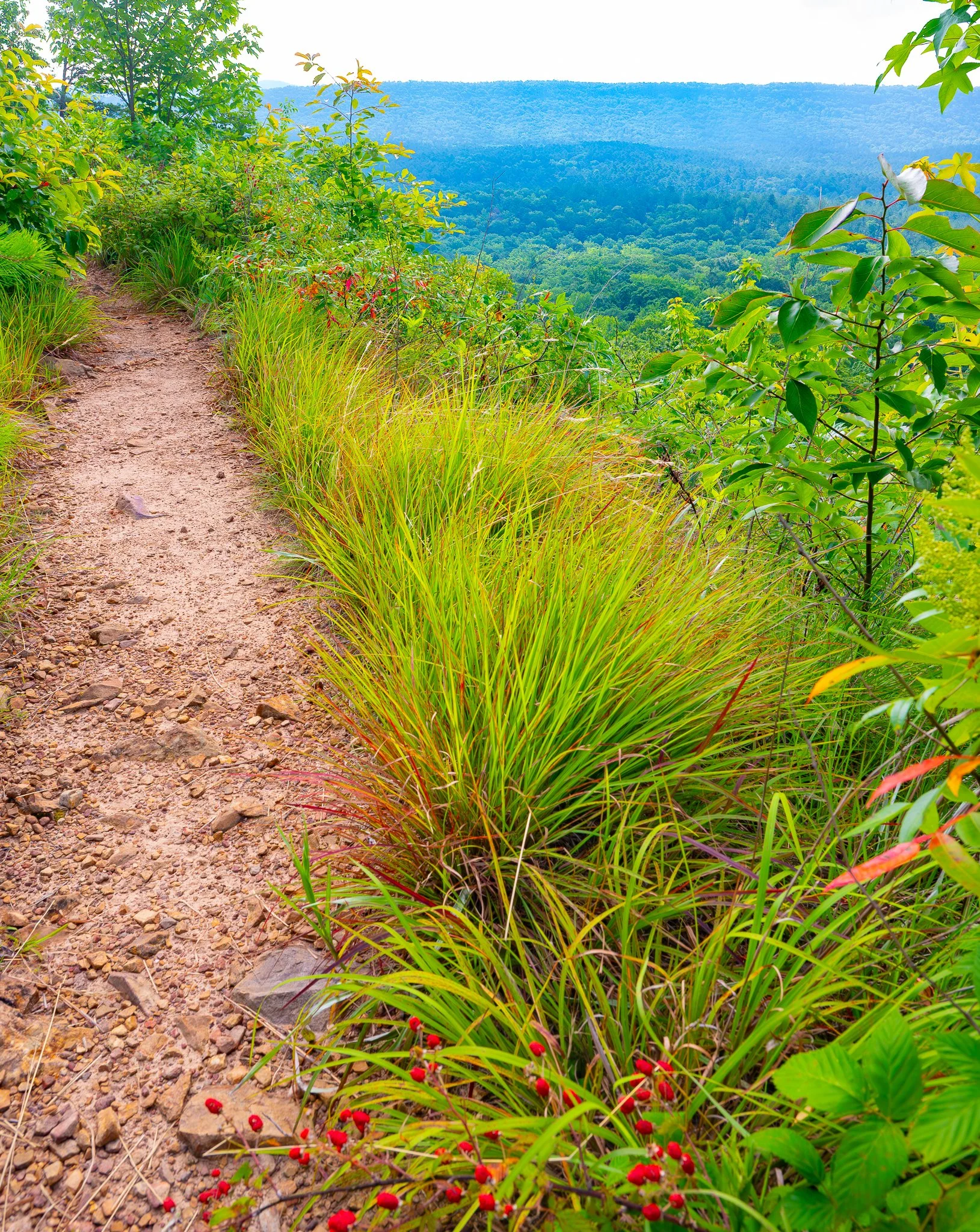
Keown Falls Loop Trail in Chattahoochee National Forest
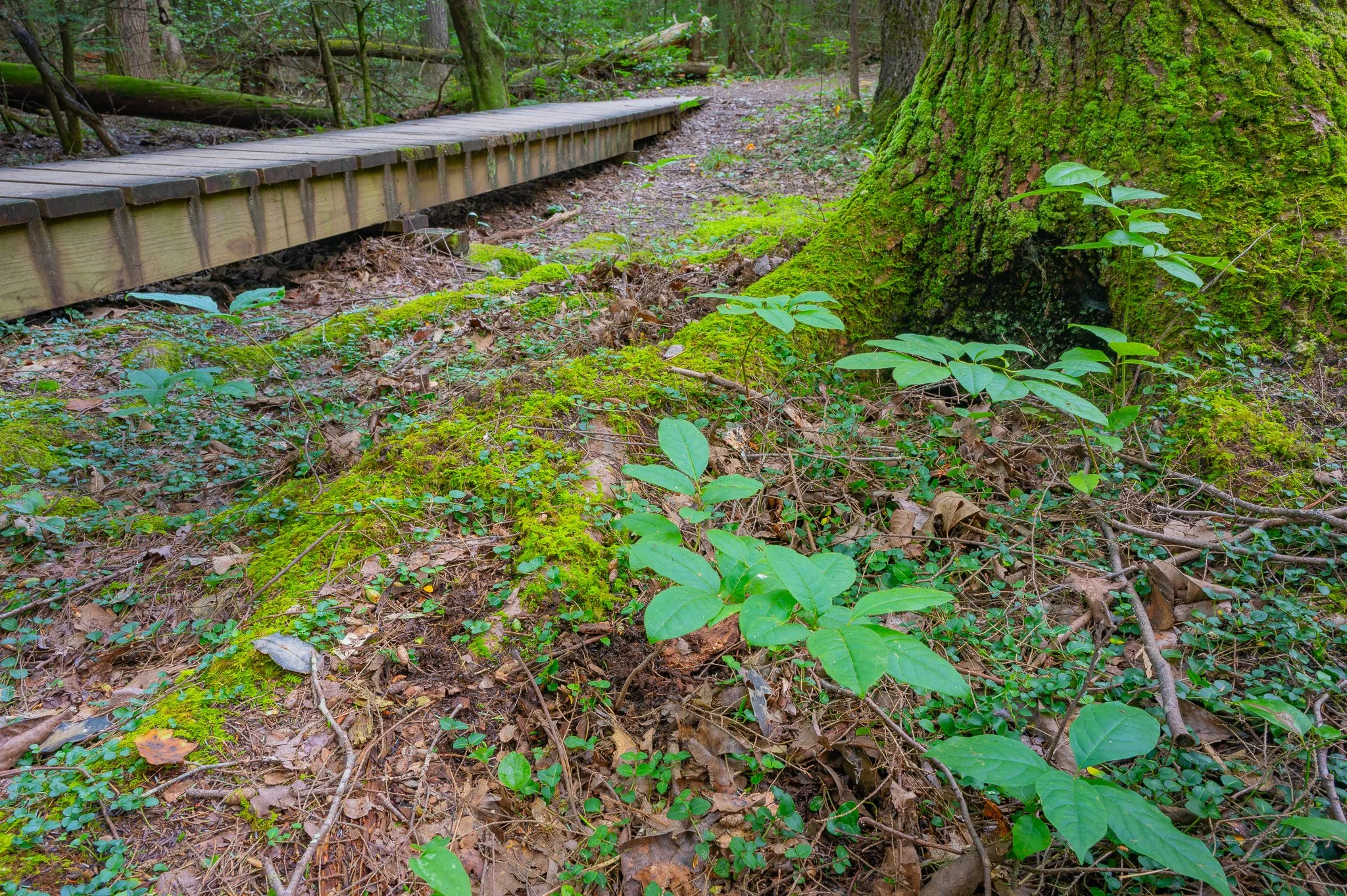
First and possibly foremost, is a good durable pair of shoes or boots. Rocks, roots, and water are tough on footwear and even a strong pair of cross trainers won’t keep your feet dry and uninjured. Hiking shoes and boots with a fabric like Gore-Tex are truly amazing for keeping your feet protected. I have a pair of Teva hiking boots that are so abused that the outer portion is tearing. It might be hard to believe, but I have stood in streams with them in this condition and my feet did not get wet. Other features that will keep a hike a wonderful excursion are a wide toe box, sturdy and grippy souls, and support for both your ankles and arches.
Hard shell knee pads have proven vital for me. One main reason I go into the forests is to take macro shots of tiny things like flowers, mushrooms, and insects. So I’m often kneeling on hard terrain that could send me to a surgeon’s office. I also take scenery photos from low angles which finds me kneeling even more. With hard shell knee pads, I don’t even feel the rocks. The knee pads are knee savers, and in turn they save the whole experience.
A towel is a useful item to bring with you. Very Douglas Adams of me, isn’t it? But yeah, a regular bath towel can be quite a nice addition. There are times I need to have my camera right on the ground and if I position it under the camera, it can be a good stabilizer for long exposures. I can wipe off muddy hands with it before handling my precious camera. And it’s not a terrible cushion when you sit for a breather.
Most of my hiking is during the muggy months of spring and summer. Sweat gets in my eyes and it can be difficult to focus my lens or even compose an image. A ball cap or sweat band eliminates this altogether. Or if I’m in wide open fields under direct sunlight, a ball cap helps shade my vision. I know, this is what sunglasses are literally for, but they mess with my ability to find correct exposure as they darken my vision. I could pack regular glasses and switch pairs when needed, but glasses are fragile and expensive. There’s a realistic chance they will get broken or bent and I don’t want another mandatory cost.
Water. You must bring water with you. It is so easy to underestimate how dehydrated you can get on a long hike. Even in the constant shade of woods and forests your body is rapidly losing water. Having a ready source of clean, potable water can mean the difference between an enjoyable jaunt on a secluded trail and someone finding you passed out. If all you can afford is a bottle of water from the grocery store you’re still better off than having none with you. But if at all possible get a tumbler, a canteen, or thermos that is double or triple wall insulated. Please, do not think a drink from a stream will do you just fine. Microbes in the water can make you terribly sick and some people have developed life threatening conditions from sipping creek water.
Unless you’re in bear country, bring something to eat. Some photographers will pack a lunch such as a sandwich and some fruit. I bring granola bars, energy bars, or dried fruit. I can tell you from experience that photographing the outdoors is so fun that you’ll lose track of time. Suddenly you’re hungry and you will need food. Remember that you’re doing something quite physical and you must keep your strength up. Also, don’t be persnickety about putting wrappers in your backpack. Don’t leave them in nature. Just don’t. Oh, and about being in bear country, leave the snacks in your car. At least you’ll have sustenance available much sooner than having to drive to the nearest fast food joint. Which is likely an hour or more away.
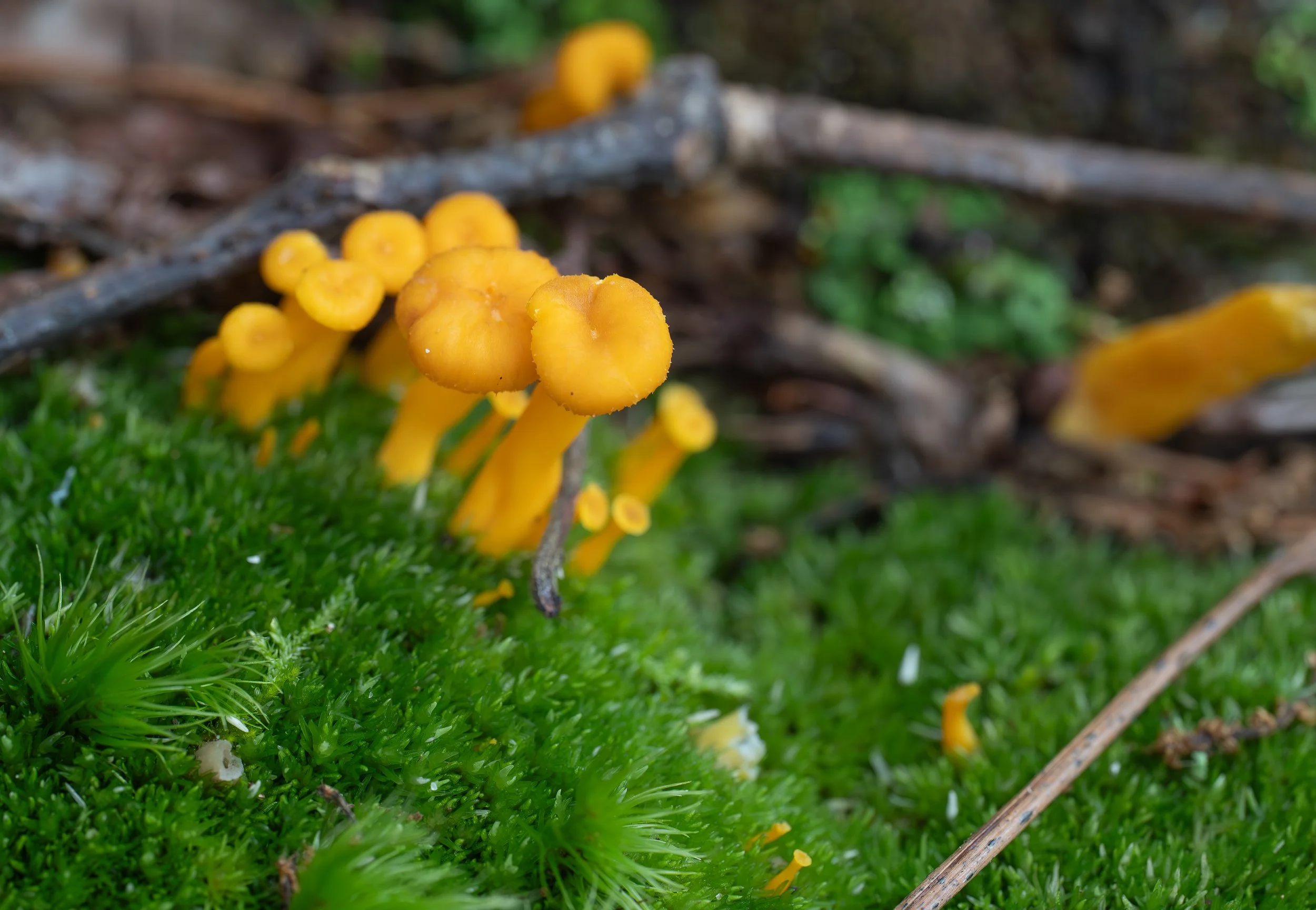
Mushrooms on the Keown Falls Loop Trail.
I have found that my photography is better if I am enjoying the hike rather than just enduring it. And that helps me get out there more. Which is simply more opportunities to create better images. I think these few items will help you, too.
Are there things you might recommend that’s not included here? I’d like to know what your go-to things are that keep you safe and comfortable when you take a photo hike. Please mention them in the comments. And happy photographing!

Why Buy a Camera?
Are cameras worth the investment when phone cameras can be quite good? I think so, and here’s why.
It is estimated that humanity will take 2.1 trillion photos in 2025 with phones accounting for approximately 94% of these. On average Americans take 20 photos a day. And pretty much anywhere you go you are likely to see someone with their phone out taking a photo of some kind. Frankly it’s hard to wrap my head around this as, not long ago at gatherings, inevitably someone would ask “didn’t anyone think to bring a camera?”
This is a phenomenally good thing. We are now documenting our lives in the moment and by the moment without too much fuss. For example, taking pictures of what you’re cooking. Then taking pictures of what you cooked put on a plate. And then pictures of that plate of food placed on a table. And then again pictures of your spouse sitting across the table with an identical plate of food in front of them. Granted we sometimes make fun of this rather cliche scenario, but that’s because it’s so common that it can be made fun of.
So then, why buy a camera if I already have one in my phone? Wouldn’t that be a waste of money? Shouldn’t cameras then be relegated to the past and remembered fondly as a “do you remember when we used to…” sort of thing?
Let’s compare phones to Swiss army knives. Both are designed for multiple uses. On the knife there’s a couple blades, a screwdriver, a corkscrew, a leather punch, and so on. You can cut things to size, fix a few things, or open a bottle. But would you chop wood with one? Not well or within a reasonable time. For that you would need a tool that’s designed for the big jobs, such as a splitting axe. And like splitting axes are for chopping and splitting wood, cameras are also for just a couple jobs, making photos and videos. Asking why buy a camera when your phone is perfectly good is like asking why buy a splitting axe when you already have a perfectly good Swiss blade.
I know that’s a ridiculous example. Very few people are out splitting logs. Or using a two inch blade to make firewood. But it does make the point. If all you want out of a camera are snaps of family, vacations, and to share that amazing sunset from yesterday, then the phone camera is an ideal tool. It has good enough color rendition, it focuses sharply, and you can just point and click and you’ve got what you want. However, (warning: run-on sentence ahead) if you want a photograph of a babbling brook that highlights its gentle flow around stones with tree branches hanging over it, with realistic color, and in focus from the closest rock to the most distant cloud, while at the same time having immersive depth and it be a file large enough to print and hang on a wall...then you need a camera. Or if you want stunning candids of your grandchildren with accurate skin tones and a blurred background, you need a camera.
Comparing the two, my phone is quick and simple and portable and in my pocket at this moment. Whereas my camera is a specialized tool to make realistic images for display. It is never in my pocket.
So I use both. They have their unique advantages and complement each other in ways I feel most of us don’t think about. Instead of the question being why would you buy a camera, it should be why don’t you already have one? My opinion is obviously biased by my love of photography, but you should really make it happen. For a few hundred dollars you can get a good camera and lens and learn to craft stunning photographs for yourself. It’s great fun, and you can put your work on display in your own home and feel proud that you did this beautiful thing.